
Islands of Adventures in the Hebrides
Below is an article I wrote for The Scotsman, originally published on the 9th of May 2026. It is also available to read here.
The seed for Our Islands came when I found a little vinyl single of a song recorded on the Isle of Lewis in the 1970s about the inexplicably true story of a film set escapee bear in the Hebrides. I became quickly enchanted with imagining this bear’s adventures as he criss-crossed the islands, and while writing the story it became clear that the landscapes Bear and Isla would inhabit had as much importance as the characters themselves. I found myself heavily drawing on my own experiences in the Hebrides: the sketches, photographs, and jotted down diary entries I have made over my many visits to these islands became the reference point for Bear and Isla’s world: I filled the spreads with the changing weather, shifting scales, and wildlife that grabs me so much when I’m out there experiencing them first-hand. The different personalities of these islands became the core of the book: that sense of awe and discovery that comes with rounding a coastline to unexpectedly discover an ancient crumbling castle, or a noisy colony of seals lolling around the slippery rocks. These are just a few of those magical islands.
Isle of Eigg
Eigg is immediately identifiable amongst the Small Isles due to the imposing An Sgùrr, which juts out like a colossal ship from a grassy cresting wave. The island is a hubbub of activity when we arrive, the busy little harbour (although not much more than a slipway) is alive with people, their voices intermingling with the rumble of the Calmac ferry. It is also strikingly green, and a pocket of temperate rainforest belies the rich habitats and eco-systems which thrive here. Exploring, we cross numerous babbling burns which help power the island’s off-grid power system, along with wind and solar, providing the kinetic lifeblood which pulses through the island. As we make our way up the towards the Sgùrr, all attention becomes diverted as we are assaulted by midges - we abandon our plan and hurry to the water’s breezy edge to hear the singing sands: quartz rubbing together on the breeze, humming and howling polyphonic notes. When we leave later that night bioluminescent algae are thrown up by the motor’s engine, creating glowing green constellations, flashes of frenetic untamed energy beneath the waves.
Loch na Cuilce - Isle of Skye
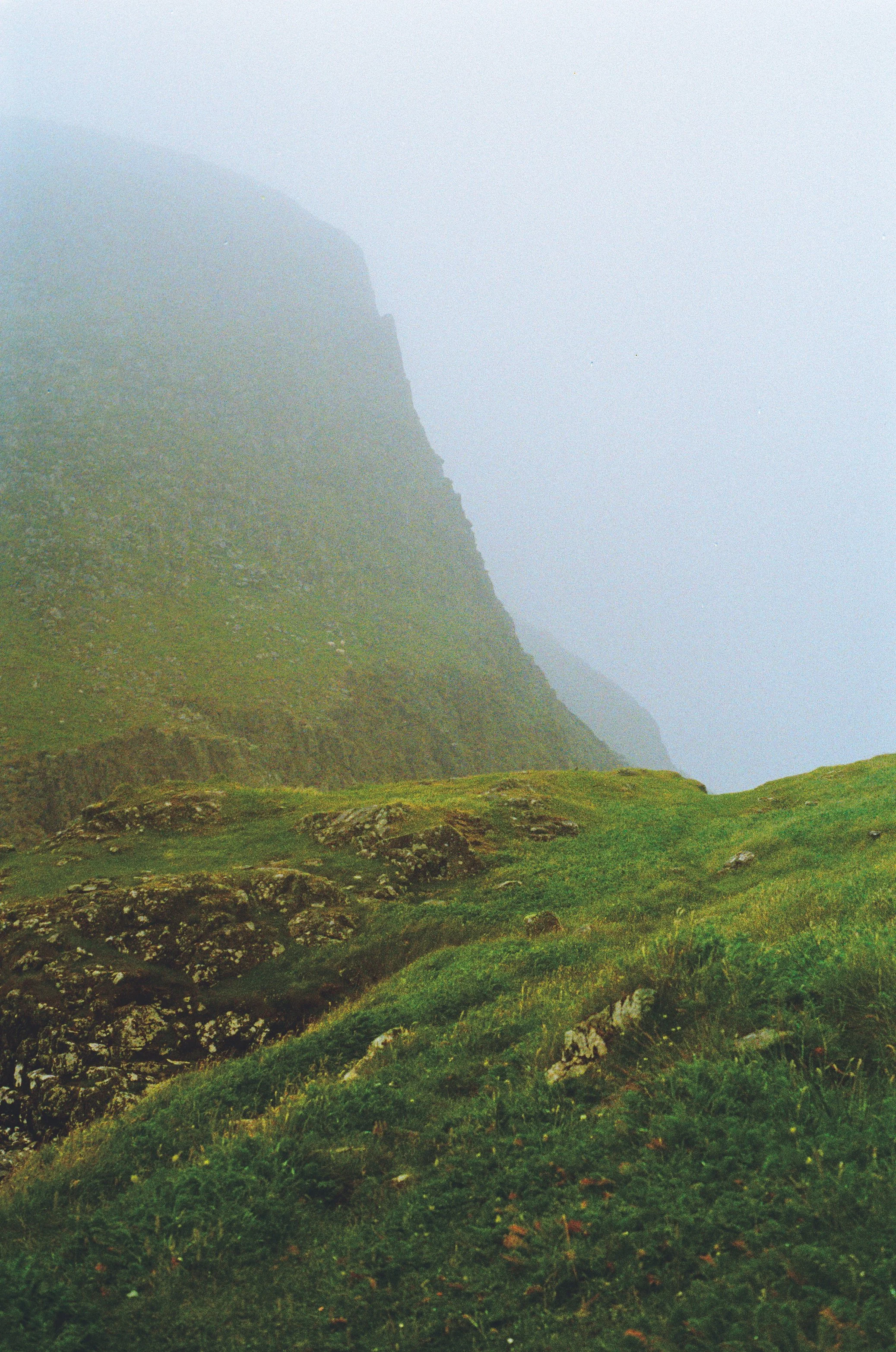
Loch na Cuilce is tucked away in the southern edge of the Isle of Skye, and is accessible only by sea or several hours on foot from the village of Elgol. Dramatic, dark mountainsides, which today are tinted blue, are encrusted with velvet grass, their rugged tips shrouded more or less constantly by heavy, rolling clouds which look ready to expel their load at any time. Waterfalls trickle down from every direction, all gathering together into the turquoise sink. On land it’s a brief walk to Loch Coruisk, the route boggy, every step bringing a satisfying squelch, and occasionally threatening to rob me of a boot. Wetland flora abounds, and between the rocks and brackish pools I spot yellow sprays of bog asphodel, and common butterwort imprisoning insects on its sticky leaves (I think of my boots gripped by the bog, and tales of malevolent kelpies come to mind). Later, a golden eagle arrives with his talons grasping a slippery eel, agitatedly moving from perch to perch in the sodden mountain bowl. Perhaps he is also unnerved by the eerie and imposing Cuillin in the distance, and the feeling of having slipped back in time; the niggling impression that the mountains may wake up and roar at any moment.
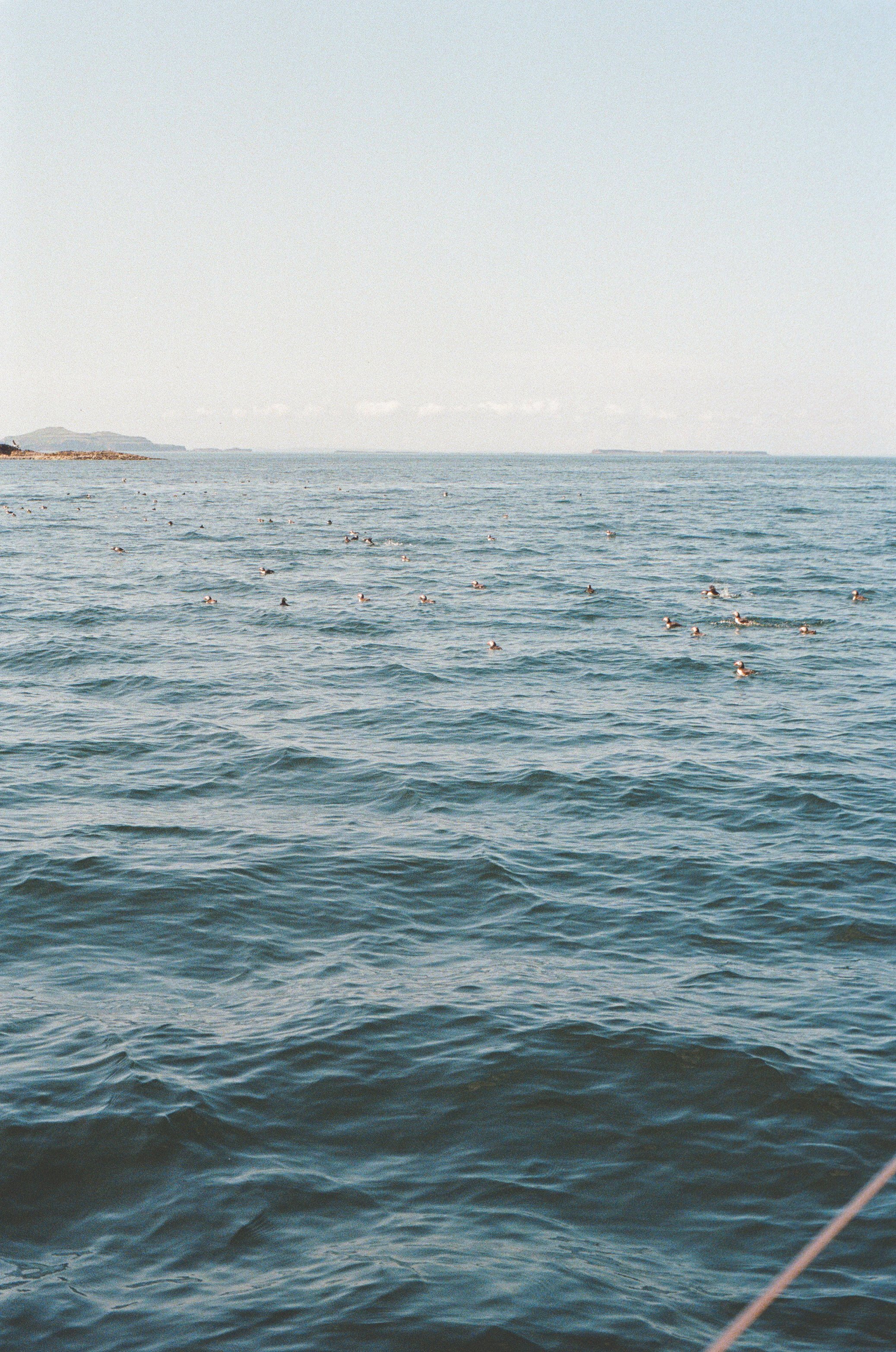
Market Bay (Traigh na Margaidh) - Mull
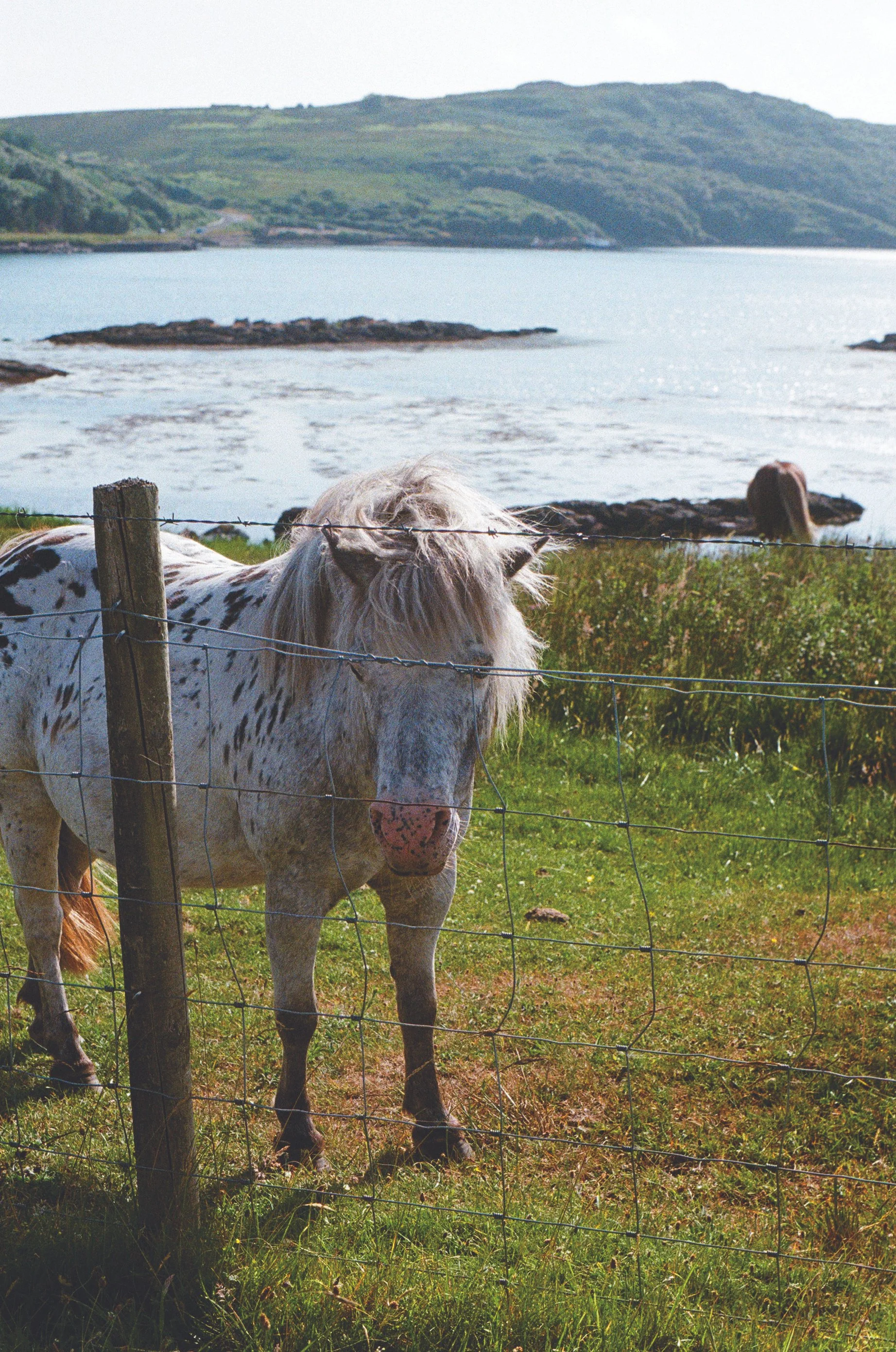
We encounter this corner of Mull on a bright and breathy summer’s day. Gentle, milky blue waves lap the shore, which despite the late hour and the beautiful weather is free of any human footprints. Ringed plover dart about on the white shell beaches, and when I go for a swim I spy a clam hurrying off, leaving puffs of bubbles and sand in its wake. The land which surrounds the bay is wrapped in a blanket of thick machair, creating a spongy carpet which shudders with insect life with every step, pink sea thrift peppering colour and its earthy scent everywhere. Now sleepy and dream-like, once cattle would have swam to this shore from other islands, making their long journey to the mainland for market. It’s hard to imagine this serene place being a destination of such activity and industry, and I try to picture the great quadrupeds splashing and snorting their way through the still water.
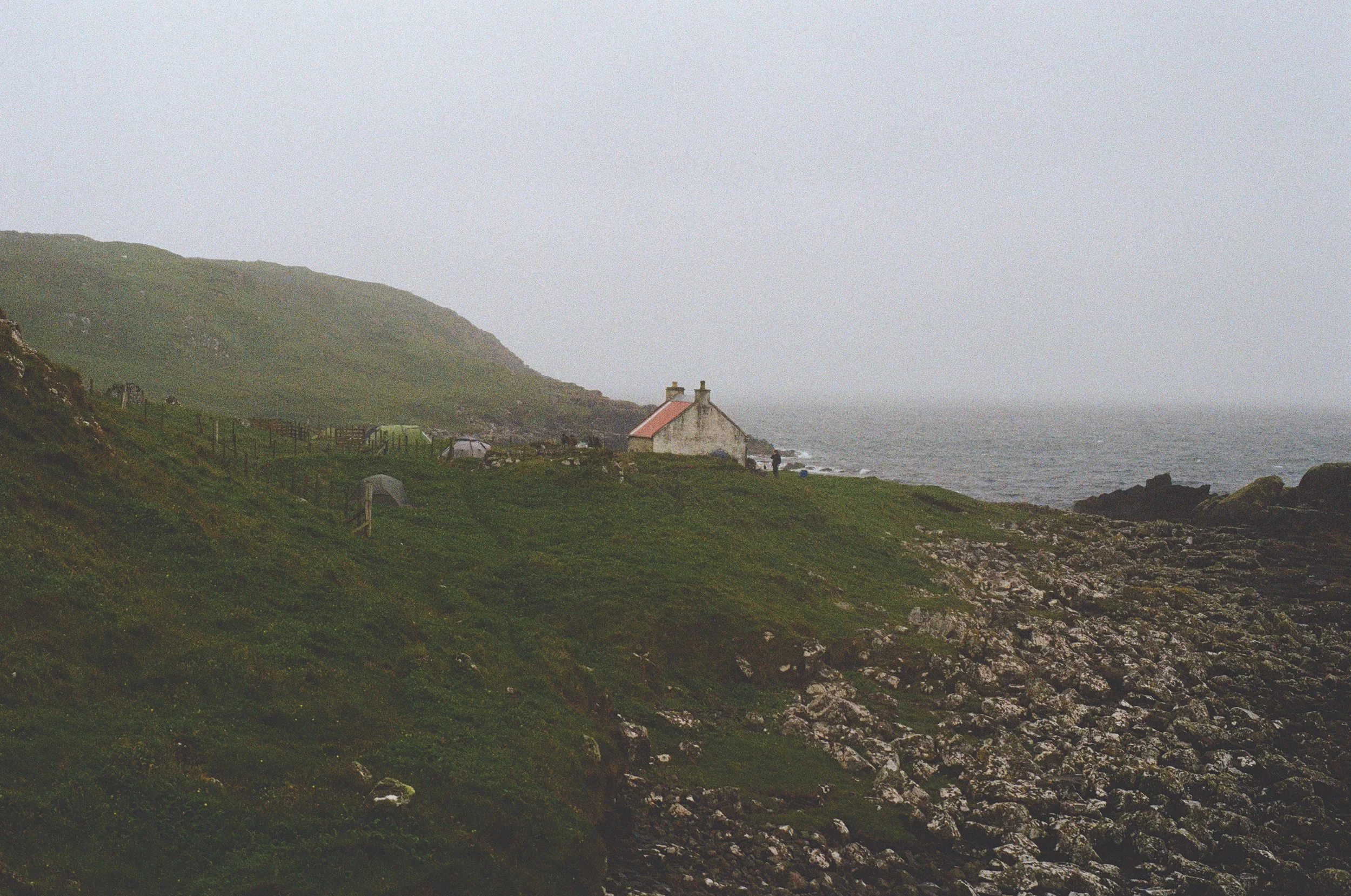
Treshnish Isles/Lunga:
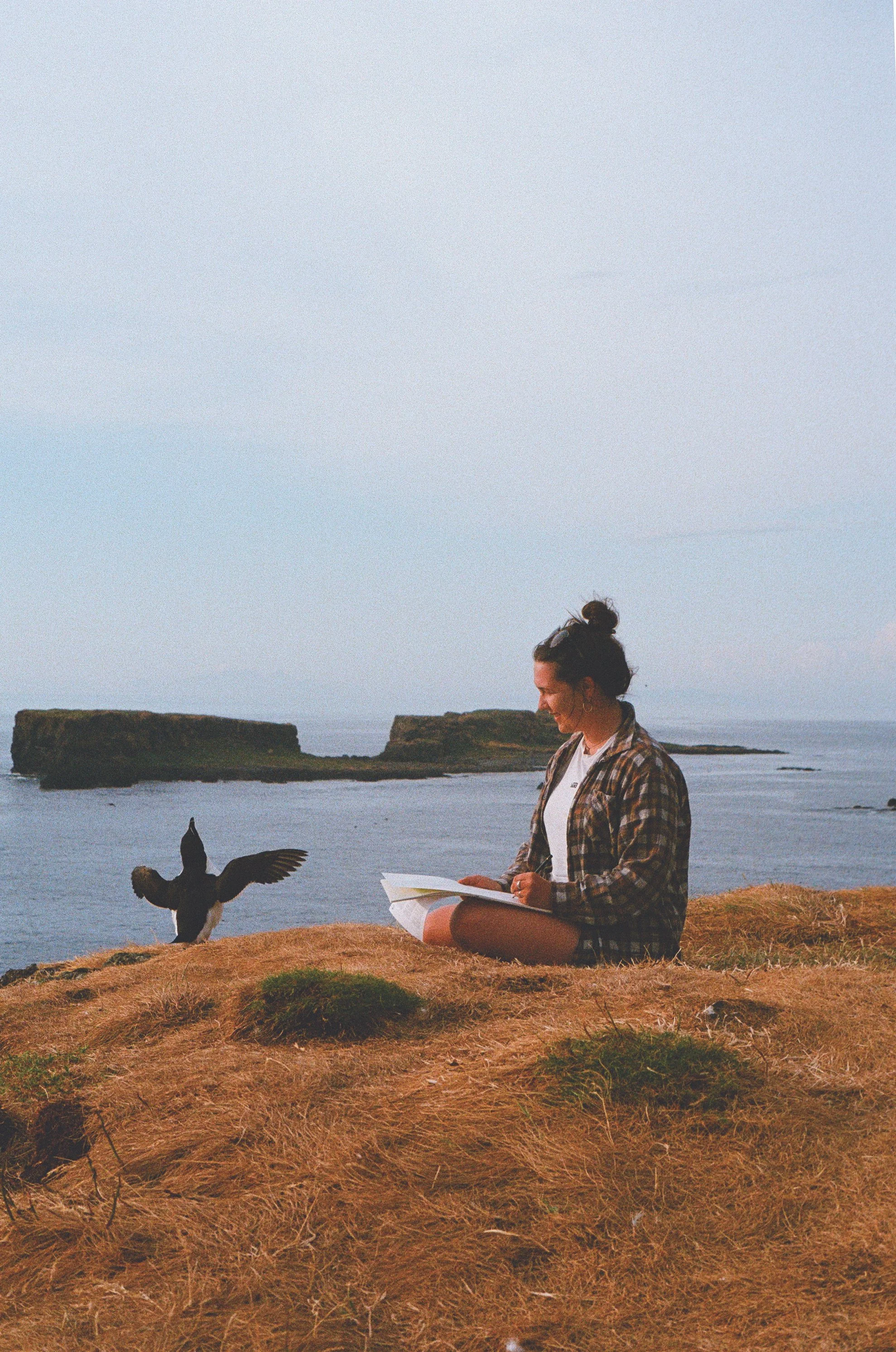
Lunga, the largest of the tiny Treshnish Isles, is a haven for the raucous and multifarious birds who come here every year to breed. Making our way to the colony we pass cormorants tucked between boulders, snake-skin chicks guarded by beady-eyed adults who brandish twigs like swords in their menacing beaks (universal language for ‘keep out!’). As grassy hillsides give way to rocky outcrops, we are hit by a wall of stench: the guano of thousands upon thousands of cackling seabirds jostling amongst crevices and on ledges. Fulmars, gannets and gulls all wheel about, and a curious razorbill gets as close as he dares, neck craning to inspect my sketchbook. Comic, diminutive puffins with their beaks stuffed with sand-eels are more cautious, and they dart in and out of the rabbit burrows on their mission to fatten up the growing pufflings. Managing to tear my eyes away from the highly entertaining (and deafening) bird life, I find amongst my feet delicate freckled wild orchids and dainty six-spot burnet moths. At night we moor just off the noisy, vibrant island, and in the midsummer twilight the sky and sea are still and lilac silver, and we can hear seals calling, unseen in the distance. Sometimes it sounds like chortled laughter, sometimes like keening.
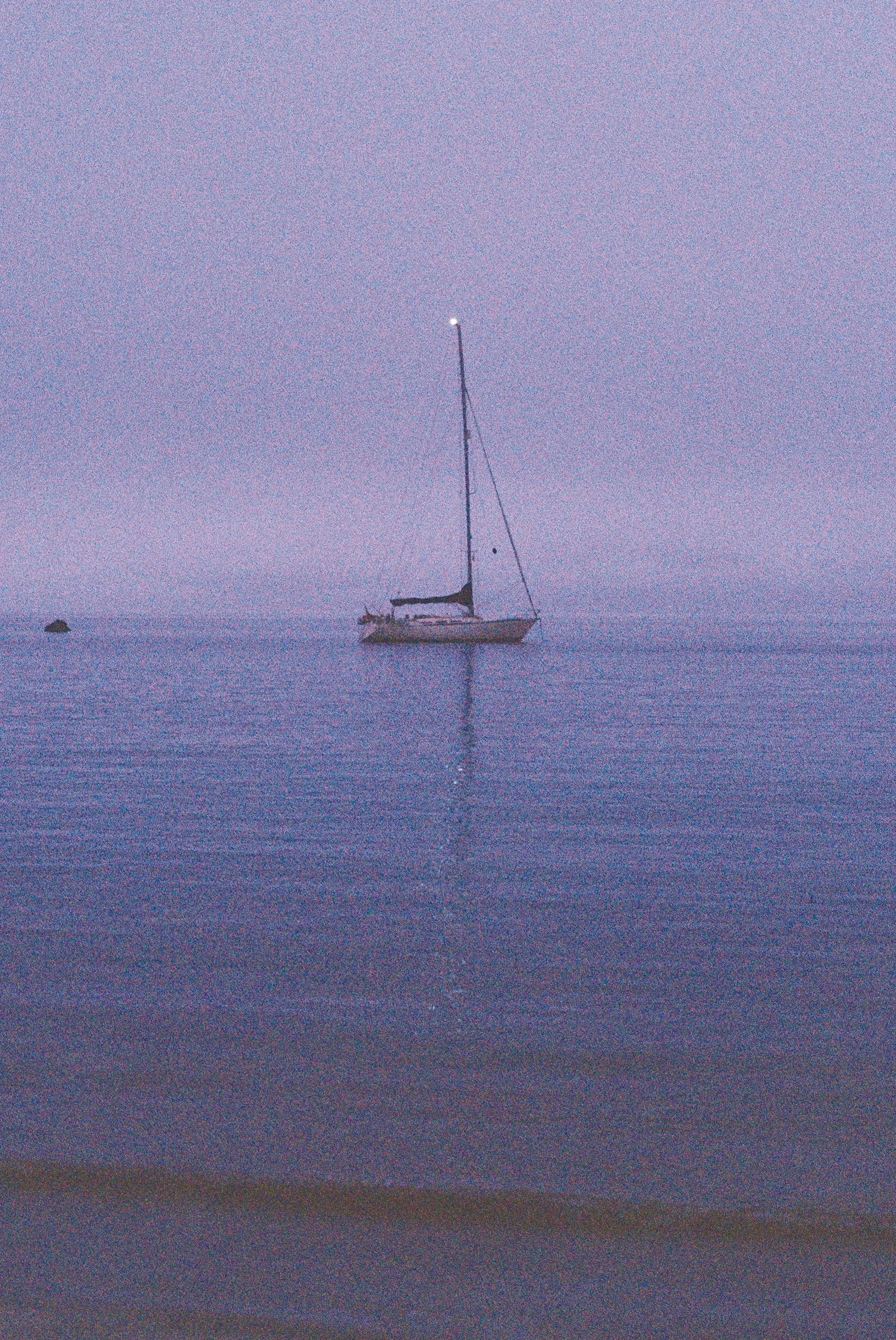
The Shiant isles
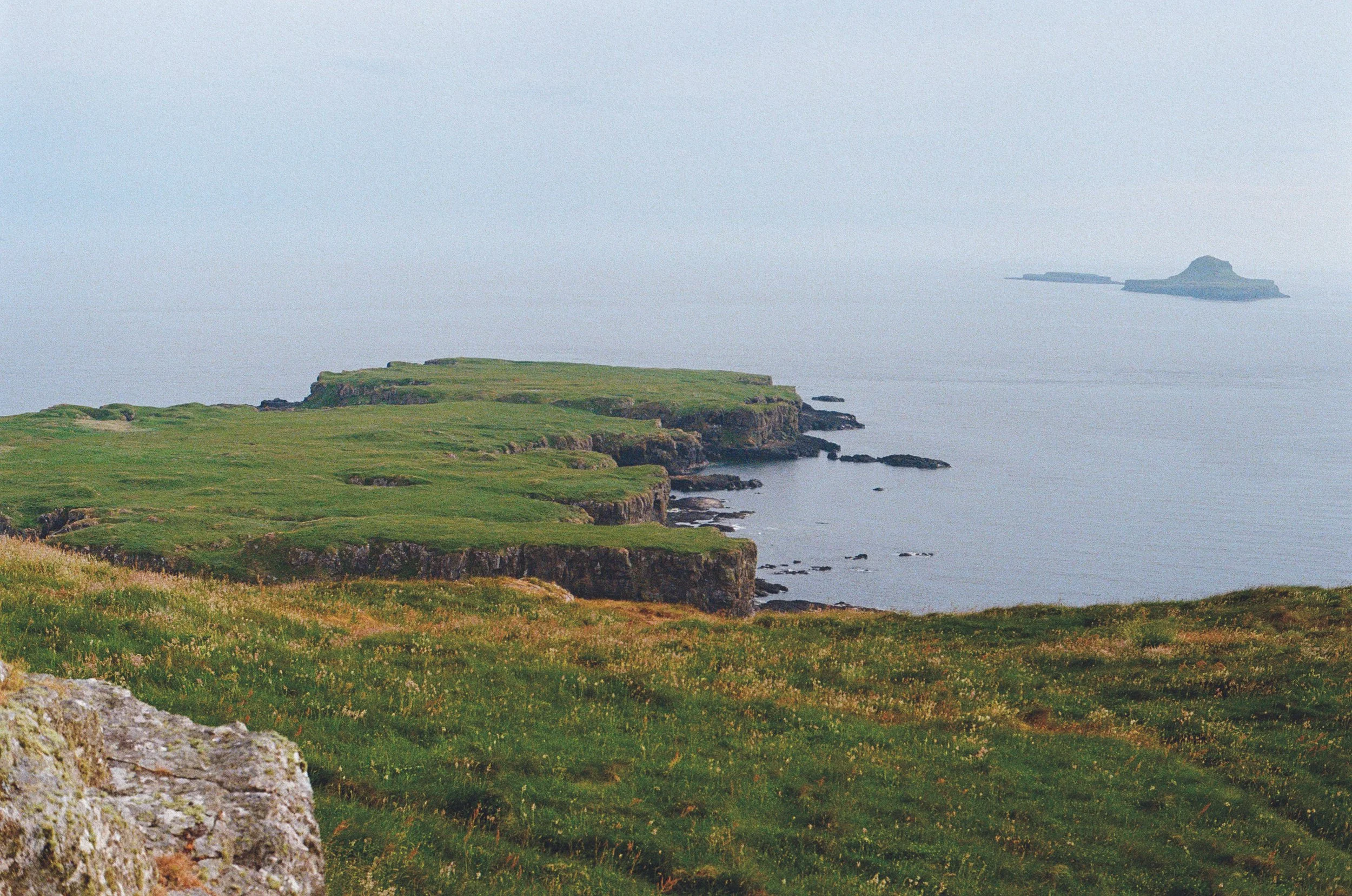
We’re many hours under sail to arrive at the Shiant Isles, and they appear in the distance like a mirage. We are greeted by hundreds of seabirds as they whizz closely past the boat. Although inhabited by people since at least the second millennium BC, by the 20th century the population had dwindled to just eight: these islands are now frequented only by sheep, seabirds and occasionally some intrepid ornithologists. The islands feel lonely, huddled together several miles from Lewis, which beyond the grey and mizzly horizon is invisible and therefore may as well not exist for us. The hillsides appear and disappear through the mist, visibility fluctuating with the weather, and it feels like we’re on the edge of the world, that a veil is rippling before our eyes. ‘Shiant’ is thought to possibly mean ‘charmed’ or ‘enchanted’, and it feels resonant to know that humans throughout time have felt the same otherworldly sensations when standing on this island. Meanwhile below, puffins bob about in the water, and overhead magnificent bonxies wheel and dive, defending their patch with vigour. The island is sprinkled with archaeological ruins, drystone walls in strings and loops, and ripples in the landscape from lazy-beds, the human input on the landscape not yet entirely forgotten.
Mariveg Bay - Isle of Lewis
Crossing the Minch, the blue men have been at work and cork-screw waves have plagued us the whole way here. The relief upon entering the shelter of this bay is palpable, with the evening already closing in we have worked hard for our passage. The environment changes in minutes: the squally clouds and black waters are being replaced with washes of clear blue and pink, the change so rapid it feels a little like arriving on another planet. We approach the rocky knolls of gneiss, threaded with tributaries which snake into numerous craters, fingers of land splicing off everywhere, islets scattered across the water like the shrapnel from a meteor. The ground is thick with heather and ferns, and the rocks are plastered with layers of lichens: white splodges like polka-dots are alien-messages. In the morning the weather has turned again, and we encounter gale-force winds and thick cobwebs of rain. I’m nearly blown off the hill-side as the wind inflates my waterproofs like a balloon. If I take off I won’t reach land again until Newfoundland.
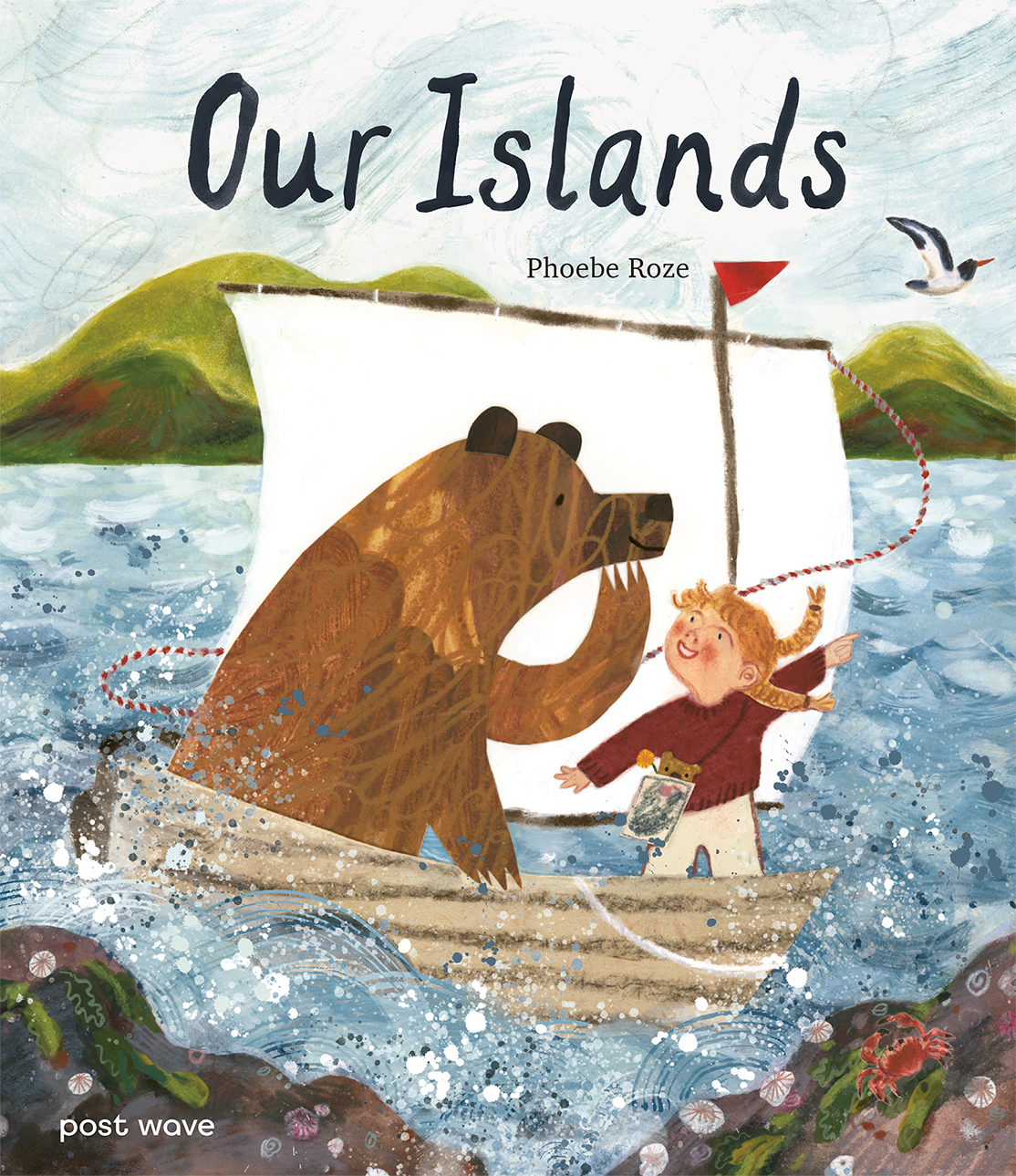
When Bear’s cosy island life is interrupted by a wild storm, he finds himself adrift and alone. Washed ashore on a new island, fear turns to wonder as he encounters an unlikely friend, Isla. Together, they join forces to help Bear find his way home. As they set off, they begin to explore the vibrant surrounding islands, discovering all kinds of different homes. But after all the amazing sights they see, Bear still longs for the comfort of his island home. Can Isla help Bear navigate the sparkling islands, or will he forever be adrift?
Join Bear on this heart-warming adventure to discover if the path back home might bring the greatest of adventures and the truest of friendships.
